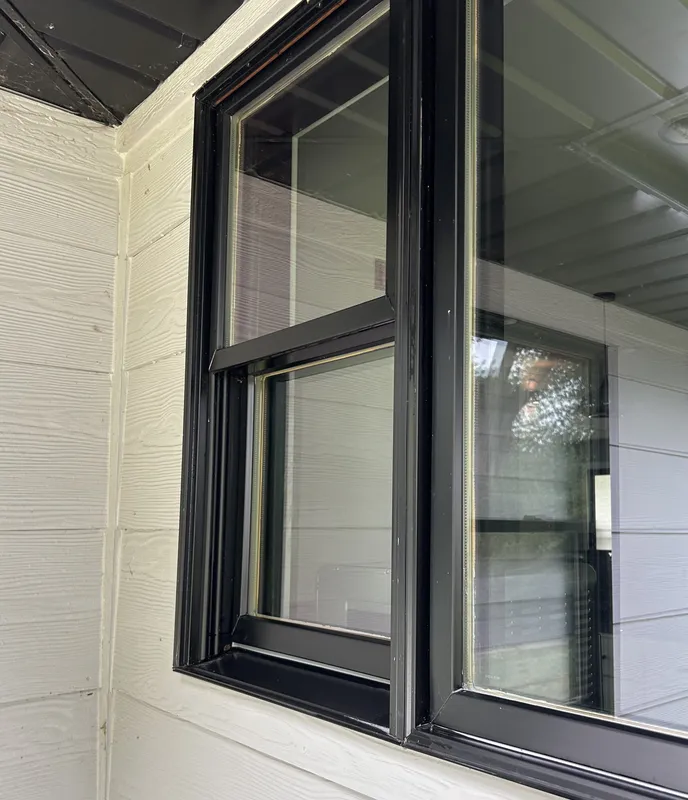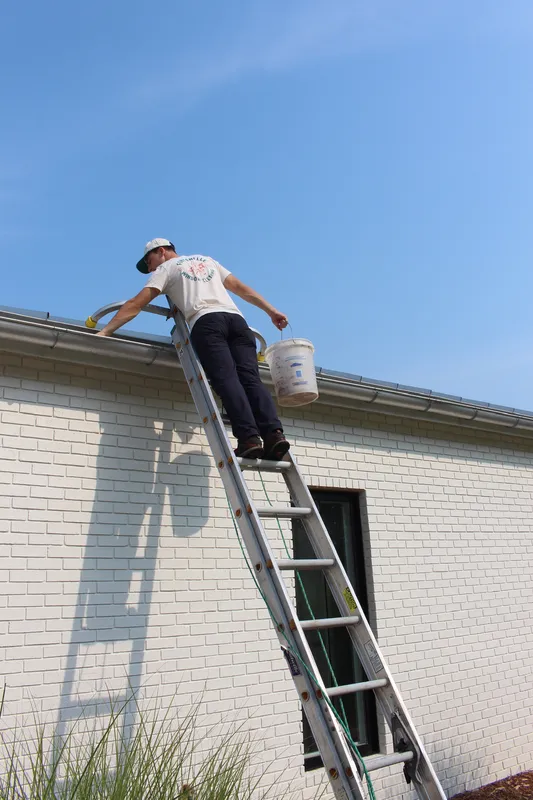
If you wiped a window down and it still looks hazy, the haze is probably not dirt. In Omaha homes it is usually one of four things: hard water spots, leftover cleaning residue, temporary condensation, or moisture trapped between the panes of an insulated window. The first three can be fixed. The last one cannot be cleaned away.
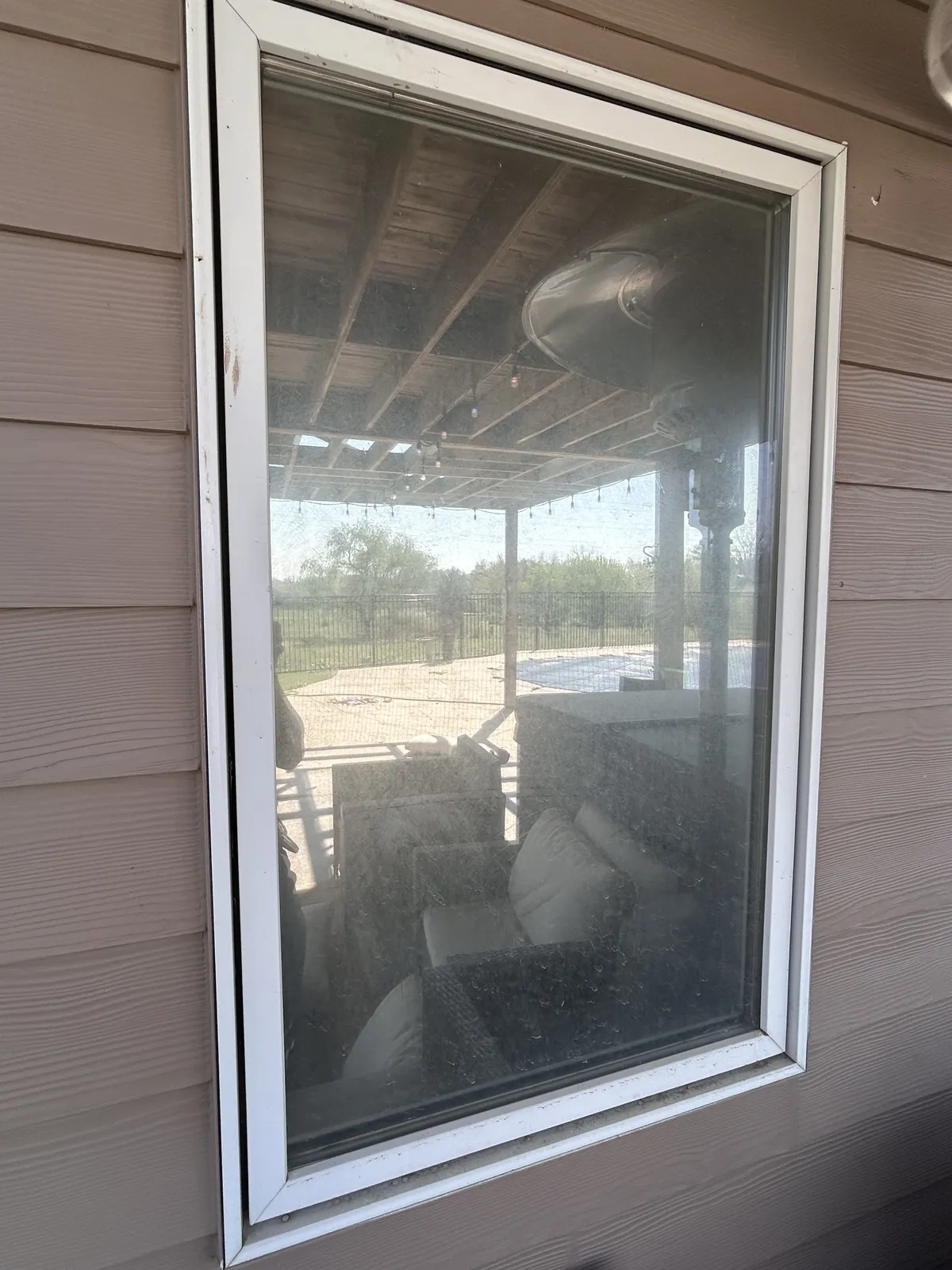
We clean windows across Omaha and Bellevue every week, and two windows that look identical from the couch often have completely different problems. Here is how to tell them apart before you spend money on the wrong fix.
The four common causes of cloudy windows
Cloudy glass is a symptom, not a diagnosis. The fix depends on where the haze is and what caused it.
- Hard water and mineral deposits. White film or spots on the outside surface, usually from sprinklers.
- Cleaning residue. A streaky film left by too much product or a dirty cloth.
- Condensation. Moisture on the inside or outside surface that changes with the weather.
- Seal failure. Fog between the two panes of a double pane window that never wipes off.
Pollen and dust can also dull glass, but those wipe away. If wiping did nothing, you are dealing with one of the four above.
Cause 1: hard water spots hiding under dirt
This is the one that surprises people most. Dust and pollen form a thin even layer over the glass and hide the mineral spotting underneath. Once the dirt comes off, the spots show.
Look for these signs on the exterior surface:
- White or gray spots, heaviest on the bottom third of the glass
- Streaks that follow water runoff
- A dull film that only shows in direct sunlight
- Worse on windows near sprinkler heads and landscaping
Lower windows near the lawn almost always have more spotting than second story glass. This is surface buildup, and it is removable. We wrote a full guide on it: hard water stains on windows.
Cause 2: cleaning residue
Too much spray, a dirty rag, or paper towels can leave a film that looks like haze. It usually shows as wide arcs or swirls that match how you wiped.
The test is simple. Clean one section with plain water and a fresh microfiber cloth, then dry it with a squeegee or a second dry cloth. If that section clears, the haze was residue.
Cause 3: condensation
On humid Omaha mornings, warm outside air hits glass cooled by your air conditioning and fog forms on the exterior. In winter it flips, and warm indoor air fogs the inside surface.
Condensation is on the surface. You can wipe it off, and it comes and goes with the weather. It is a sign of a temperature difference, not a broken window.
Cause 4: seal failure
Most windows installed in the last 30 years are insulated glass units, two panes with a sealed air space between them. When the seal fails, humid air gets in and moisture condenses on the inside faces of the glass where nobody can reach.
Signs of a failed seal:
- Fog or a milky haze in the middle of the glass, not the edges
- Water droplets or drip marks you cannot touch from either side
- Cloudiness that stays the same in wet and dry weather
- A white mineral film between the panes after the moisture cycles for a while
No amount of cleaning changes this. The unit has to be replaced. The frame usually does not.
Quick comparison
| Cause | Where the haze sits | Changes with weather? | Wipes off? | Fix |
|---|---|---|---|---|
| Hard water spots | Exterior surface | No | Not with regular cleaner | Professional hard water removal |
| Cleaning residue | Interior or exterior surface | No | Yes, with plain water and a clean cloth | Re-clean properly |
| Condensation | Interior or exterior surface | Yes | Yes | Nothing needed |
| Seal failure | Between the panes | No | No | Replace the glass unit |
Why late summer reveals more
By August, most Omaha homes have been through months of lawn irrigation, thunderstorms, humidity and constant air conditioning. Each one leaves something on the glass.
When we do late season residential window cleaning, the dirt comes off and everything underneath shows at once. Hard water spots, an early seal failure, a scratched pane. None of it is new. It was just hidden.
A simple test you can do in five minutes
Before calling anyone about replacement, run through these steps on the worst window:
- Touch the haze from inside. Does your finger change it? If yes, it is on the inside surface.
- Touch it from outside. Same question.
- If you cannot reach it from either side, it is between the panes. That is seal failure.
- If it is on the exterior and feels slightly rough or chalky, it is mineral buildup.
- If it disappears by midday, it was condensation.
This test sorts out most cloudy windows. If you still are not sure, we look at every pane during a cleaning and will tell you what we see.
FAQ
Why do my windows stay cloudy after cleaning?
Because the haze is either mineral buildup that regular cleaner cannot dissolve, or moisture trapped between the panes that cleaning cannot reach. Where the haze sits tells you which.
Can hard water permanently damage glass?
Yes, if it sits for years. Minerals slowly bond to the surface and can etch it. Spots that are a season or two old almost always come off with the right treatment.
Does condensation mean my window seal failed?
Not if you can wipe it off. Surface condensation is normal on humid mornings and cold winter days. Fog you cannot reach from either side is the sign of a failed seal.
Can professional cleaning fix every kind of cloudy glass?
No. We can remove dirt, pollen, residue and most hard water buildup. We cannot remove moisture inside a sealed glass unit. We will tell you which one you have.
Bottom line
Cloudy windows in Omaha are usually hard water, residue or condensation, and all three are fixable. Only fog between the panes means the window needs work. Not sure which you have? Request a free quote and we will check every pane when we clean.
Want the crew to handle it?
Fontenelle Window Cleaning serves Omaha, Bellevue, Papillion and the whole metro. Free quotes by text, usually within the hour.