Rinsing your windows with a garden hose feels like an easy win. In Omaha, it usually backfires. Tap water carries dissolved calcium and magnesium, and when the water dries on the glass, those minerals stay behind as white spots and streaks that get harder to remove every month.
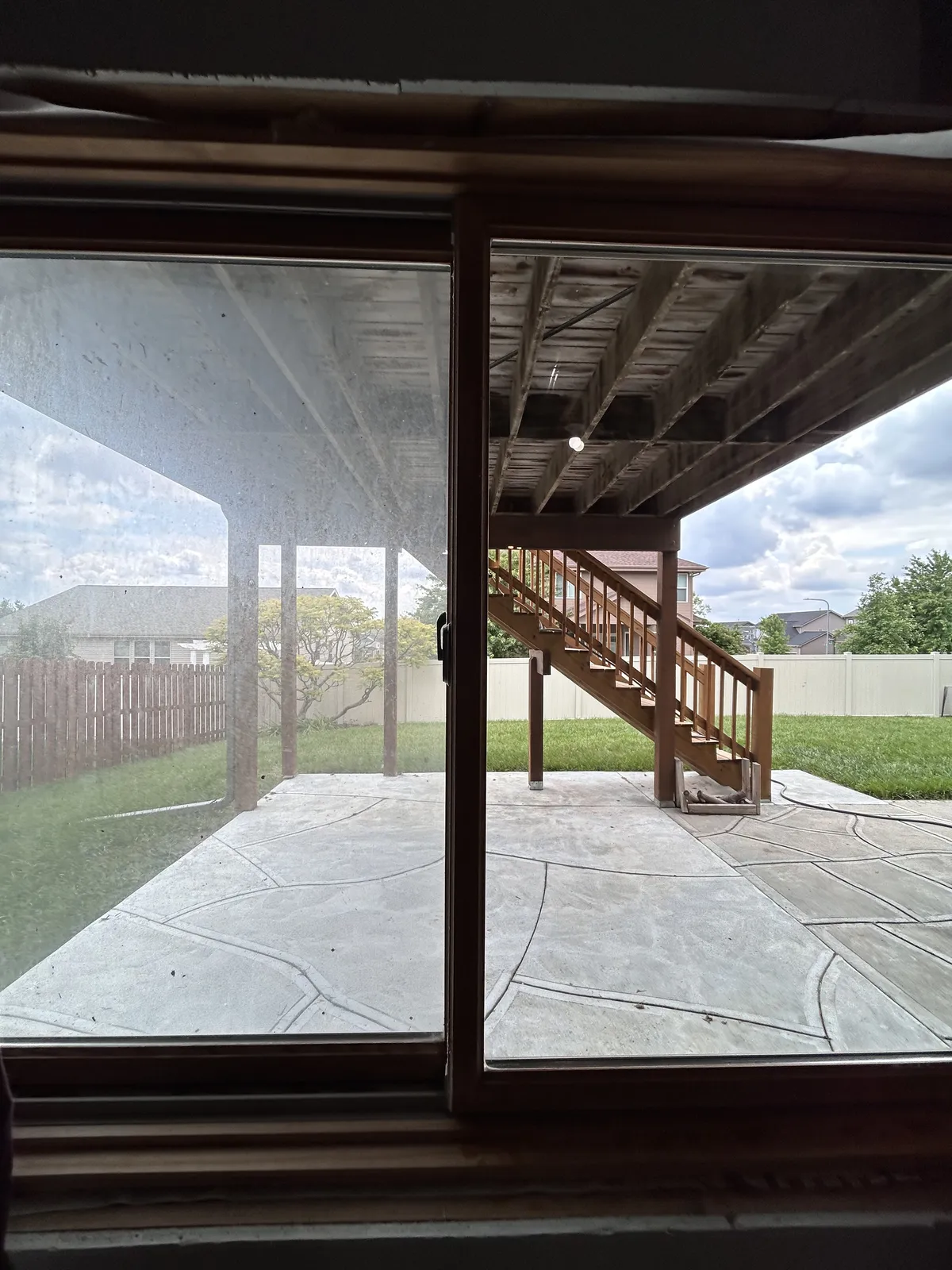
We see this on almost every residential window cleaning job in Omaha and Bellevue. The dirt comes off easily. The spots underneath are the real problem. Here is how they form, how to tell them apart from glass damage, and how to keep them from coming back.
How mineral deposits form on glass
Tap water looks clean, but it is full of dissolved minerals. They stay invisible until the water evaporates. Then they sit on the glass as a thin white film.
One rinse leaves almost nothing. Fifty rinses over a summer leave a layer you can see from the street. Repeated exposure is what turns a light haze into a stain.
Typical signs on exterior glass include:
- White or gray spots that appear after water dries
- Streaks that follow the path of runoff down the glass
- Cloudy patches that show up most in direct sun
- Heavier buildup on lower windows near lawns and beds
Sprinklers do more damage than rain
Most homeowners blame rain for spotting. Rain is actually fairly soft water. The bigger culprit is the irrigation system that hits the same window three or four mornings a week from May to September.
Sprinkler spotting has a distinct look. If your stains match these patterns, your irrigation is the cause:
- Spots concentrated on the bottom third of the window
- Round marks the size of dried droplets
- Arcs or fans that match the spray pattern of a nearby head
- One or two windows much worse than the rest of the house
Homes with landscaping tight against the foundation get it worst. The heads sit close to the glass and the overspray never gets a chance to dry off.
Why late summer reveals the problem
Omaha summers are hot and dry between storms. Water evaporates fast on sun-heated glass, so minerals set before you can wipe them. Months of dust and pollen then hide the spots.
When we clean a home in August, the dirt comes off and the mineral map underneath finally shows. Homeowners often think we caused it. We did not. We just removed the layer that was covering it.
Conditions that speed up spotting:
- Daily lawn watering during July and August
- South and west facing windows in full afternoon sun
- Rinsing glass during the hottest part of the day
- Letting water air dry instead of wiping it off
Surface buildup vs. etched glass
Not all mineral stains are equal. Fresh deposits sit on top of the glass and come off with the right treatment. Old deposits can bond to the surface and leave a permanent mark even after the minerals are gone. The table below shows the difference.
| Sign | Surface mineral buildup | Mineral etching |
|---|---|---|
| Where it sits | On top of the glass | In the surface of the glass |
| How it forms | Water dries repeatedly on the pane | Deposits left in place for years |
| Feels like | Slightly rough or chalky | Smooth, but still visible |
| Response to treatment | Usually clears with restoration cleaning | May remain visible after cleaning |
| Best fix | Professional hard water removal | Prevention going forward, or glass replacement |
The good news is that most of what we see in Omaha and Bellevue is still surface buildup. It looks permanent. It usually is not.
Why glass cleaner does not work
Household glass cleaners are made for fingerprints, dust and everyday smudges. Mineral deposits are a different chemistry. Ammonia based sprays slide right over them.
Here is what usually happens when homeowners try:
- Dust and fingerprints come off, spots stay
- Paper towels leave lint and the glass looks worse in the sun
- Scrubbing harder with a rough pad scratches the glass and still leaves the spots
- Vinegar helps a little on fresh spots but does nothing on old ones
Professional hard water removal uses a mild acid based restoration product and a proper scrub, then a squeegee finish. It is included free for members of our membership program.
How to prevent hard water stains
You cannot change what is in Omaha tap water. You can change how often it lands on your glass and how long it sits there.
- Adjust sprinkler heads so the spray stops short of the house
- Switch heads near windows to low angle or drip where possible
- Water early in the morning so any overspray dries before the sun hits
- If you rinse glass yourself, squeegee or towel it dry right away
- Get fresh spots cleaned within the season instead of waiting years
Two of those changes, redirecting heads and cleaning on schedule, solve the problem for most homes.
What we do about it
On a standard exterior clean at $7 per pane, we wet, scrub, squeegee and detail every pane. That removes dirt, pollen and fresh water spots. If there is bonded mineral buildup, we point it out and give you options.
Members on quarterly or more frequent plans get hard water removal included. Their glass never sits long enough for spots to bond, which is the whole point of a schedule.
FAQ
Does rain cause hard water stains on windows?
Rarely. Rainwater is soft and low in minerals. The spotting you see after a storm is usually dust and pollen that the rain moved around. Hoses and sprinklers are the real source of mineral stains.
Why are the spots still there after I cleaned?
Standard cleaners remove dirt and oils but do not dissolve minerals. If the spots have been there more than a season, they have likely started bonding to the glass and need a restoration product to come off.
Can hard water stains be permanent?
Yes, if they sit for years. Long term deposits can etch the glass surface. At that point cleaning improves the look but cannot fully restore it. Catching spots early is the difference.
Does drying the glass after rinsing really help?
Yes. Minerals only stay behind when water evaporates on the glass. If you squeegee or towel the water off, most of the minerals go with it.
Bottom line
Hard water stains in Omaha come from your hose and sprinklers, not the sky. Redirect the heads, dry the glass when you rinse, and get spots cleaned before they bond. If your windows already have a mineral map, request a free quote and we will tell you honestly whether it is surface buildup or something more.
Want the crew to handle it?
Fontenelle Window Cleaning serves Omaha, Bellevue, Papillion and the whole metro. Free quotes by text, usually within the hour.