Foggy glass is not always a broken window. In Omaha and Bellevue, the same hazy look can come from summer humidity, sprinkler mineral spots, or a failed seal inside a double pane window. Only the last one needs replacement. The first two need cleaning or patience.
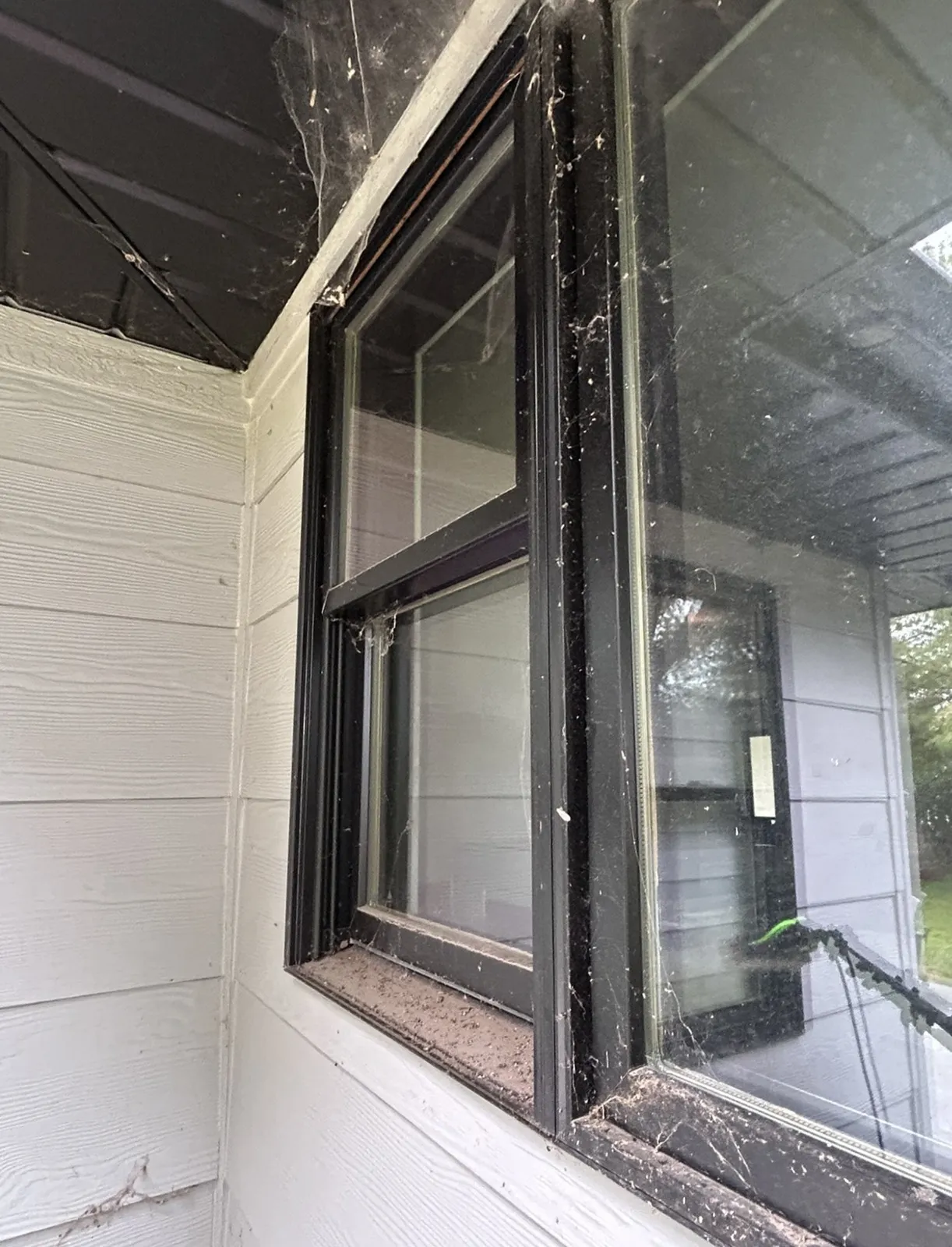
The fastest way to tell is location. Fog on a surface you can touch is a maintenance issue. Fog you cannot reach from either side is seal failure. Here is how to sort it out before you call a window company.
What makes window glass look foggy
During residential window cleaning appointments, homeowners often point at a pane they think is ruined. Most of the time it is not. Fog has several common causes:
- Condensation from humidity meeting cool glass
- Hard water and mineral deposits from sprinklers
- Dried storm residue and dust
- A film of pollen or cottonwood fluff
- Moisture trapped between the panes of an insulated unit
The first four sit on the outside of the glass and can be cleaned. The last one is inside the sealed unit and cannot.
What window seal failure actually is
Modern windows are insulated glass units. Two panes of glass are separated by a spacer and sealed at the edges, with dry air or argon in the gap. That sealed space is what makes the window insulate.
Over time the seal can crack, shrink or pull away. Humid air leaks in. When the temperature drops, that moisture condenses on the inside faces of the two panes, where no cloth can reach it.
Signs that point to a failed seal:
- Fog or haze in the center of the glass, between the panes
- Water droplets or drip trails you cannot touch from either side
- Cloudiness that looks the same on a dry day and a humid one
- A chalky white film inside the unit after repeated wet and dry cycles
- In some cases, a slight bowing of the glass
Seals fail more often on south and west facing windows, where daily heat expansion works the edges harder. Age is the other factor. Many units start failing between 15 and 25 years.
Why late summer brings so many calls
August in eastern Nebraska is hard on glass. Months of humidity, thunderstorms, lawn irrigation and air conditioning all leave a mark, and they arrive together.
- Humidity produces morning condensation on cool exterior glass
- Sprinklers leave mineral spots that show in low afternoon sun
- Storms leave dust and pollen streaks after the water dries
- Indoor cooling widens the temperature gap that causes condensation
The key difference is consistency. Weather fog comes and goes with conditions. Seal failure fog stays put no matter what the weather does.
Mineral buildup looks like damage but is not
Hard water spotting is the most common false alarm we see in Omaha. Sprinkler overspray dries on the glass day after day, and the minerals build up into a cloudy patch that looks etched.
Ways to tell it is mineral buildup and not seal failure:
- It is heaviest on lower windows and the bottom of the glass
- It follows a spray arc or runoff pattern
- You can feel a faint roughness with a fingernail
- It is on the outside face where you can touch it
This comes off with a proper restoration cleaning. Members of our membership program get hard water removal included on every visit.
Side by side comparison
| Question | Humidity condensation | Mineral buildup | Seal failure |
|---|---|---|---|
| Where is it? | Surface, inside or outside | Exterior surface | Between the panes |
| Can you touch it? | Yes | Yes | No |
| Changes with weather? | Yes, gone by midday | No | Slightly, but never gone |
| Follows a pattern? | Even across the glass | Spray arc, bottom heavy | Center of the pane |
| Fix | None needed | Hard water removal | Replace the glass unit |
What we check when we clean
A cloudy pane needs a closer look than a glance from the driveway. When we clean, we see every pane up close from both sides. We look at:
- Whether the haze is on the inside face, outside face, or between the panes
- Whether it changes after we clean
- Whether spots follow a sprinkler or runoff pattern
- The age and condition of the frame and seal edge
Two windows next to each other can look identical before cleaning and turn out completely different. One clears up. One has a failed seal. We tell you which is which.
Before you replace anything
Replacement is expensive and often unnecessary. Run through these questions first:
- Can you wipe the haze from inside or outside? If yes, it is not seal failure.
- Is it gone by afternoon? That was condensation.
- Is it worse near sprinklers and on the bottom half? That is mineral buildup.
- Is it in the middle of the glass and unreachable from both sides? That is the seal.
If only one or two windows have truly failed, most glass shops can replace just the insulated unit and keep the frame.
FAQ
Is foggy glass always seal failure?
No. Humidity, mineral deposits and surface residue all cause fog that looks similar. Seal failure is the only one that sits between the panes where you cannot reach it.
How can I tell if moisture is between the panes?
Try to wipe it from both sides. If neither side changes the look, the moisture is inside the sealed unit.
Can window cleaning fix a failed seal?
No. We can clear dirt, residue and mineral buildup from both surfaces, but nothing reaches inside a sealed unit. The unit itself has to be replaced.
Should I replace a window that looks cloudy?
Not until you know the cause. Most cloudy windows in Omaha are surface buildup and clear up with a proper cleaning. Replace only the ones with fog between the panes.
Bottom line
Fog you can touch is cleaning. Fog you cannot touch is seal failure. Before you price out new windows in Omaha or Bellevue, get a free quote and let us clean and inspect every pane. You may need far fewer replacements than you think.
Want the crew to handle it?
Fontenelle Window Cleaning serves Omaha, Bellevue, Papillion and the whole metro. Free quotes by text, usually within the hour.